
May 1920 – September 1923 : Two Dates, One History…
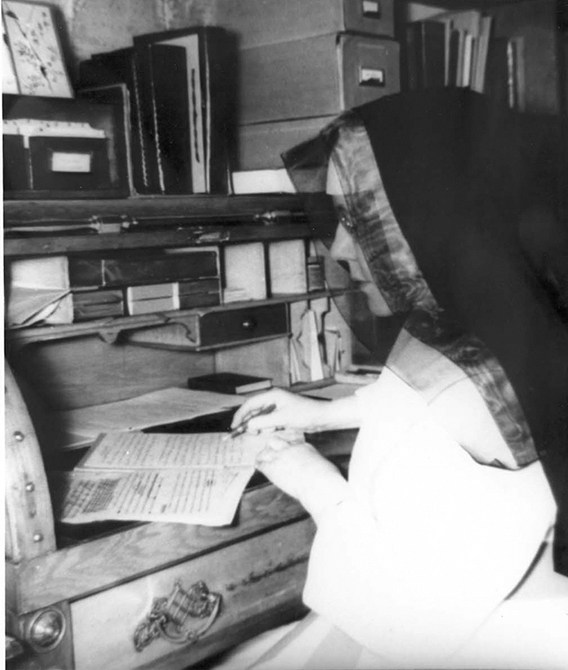
This story begins with an audacious and adventurous Quebecer by the name of Délia Tétreault. As a child, Délia had a prophetic dream. She saw an immense field of wheat, and as she watched, the golden stalks transformed into the faces of children of different nationalities. She understood that these children did not know the Good Lord. From then on, her life had a purpose. Délia planted her dream and let it take root.
In 1902, the first leaf sprouted. Délia, always known for dreaming big, founded the first Canadian missionary institute: The Missionary Sisters of Immaculate Conception (MIC), a community devoted to the Mission. Her goal was not to impose conformity, but to convey style, spirit, momentum, and spirituality. Délia often said: “The spirit which ought to animate us is by all means a spirit of gratitud… doing all things, accepting all things in thanksgiving, this is the main ‘raison d’être’ of our Society.” Offshoots of the organization quickly spread, and soon her good work was blooming all around the world.
Délia Tétreault always knew how to substantiate her far-reaching vision. She was an educator who knew how to communicate her ideas in simple terms. In a rapidly changing society, she recognized how important it was to spread the missionary spirit. The written word could be the key to mobilizing the population. Délia realized there was only one reason to start a missionary magazine: to spread the mission’s good work. This MIC initiative became a precious educational tool. Délia, an innovative and self-educated woman from Marieville, took charge of the project with the help of a specialized and skillful team of experts.

1920 – From Dream to Reality
The French edition: Le Précurseur was launched on May 1st, 1920, after a long and marvelous adventure. Its history can only be understood in relation to the Mission. The first issue’s thirty nine pages read like the Missionary Sisters of the Immaculate Conception Bulletin. It was decided that the magazine would be published four times a year. The design was modest and the words were simple – they came from the heart. Stylistic constraints and literary recognition were never the goal; nonetheless, the magazine was the first of its kind. Délia’s decision to venture into the world of publishing in 1920 is a testament to her clairvoyance and extraordinary courage.
The propagandists
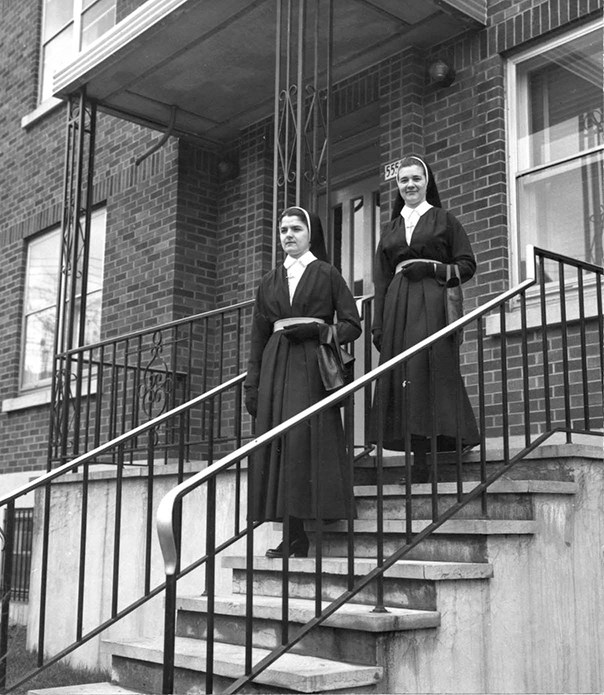
Le Précurseur began to reach thousands of families. Most members of the MIC Community became involved in the publication, either by writing articles or distributing issues. Back then the magazine was part of the missionary formation. For years, the missionary Sisters would distribute copies in person with the permission of the parish priests and bishops. Many families still remember the regular appearances of the Sisters whom they would call “Les Soeurs du Précurseur.” To promote the magazine, Délia also believed in collaborating with the secular community. The first issue’s editorial therefore reads: To our Immaculate Mother and Patron, during this month consecrated to her, we ask that she inspires new and fervent propagandists, apostles of the Mission; as our readers multiply, so do friends of the Mission.
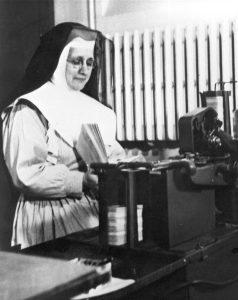
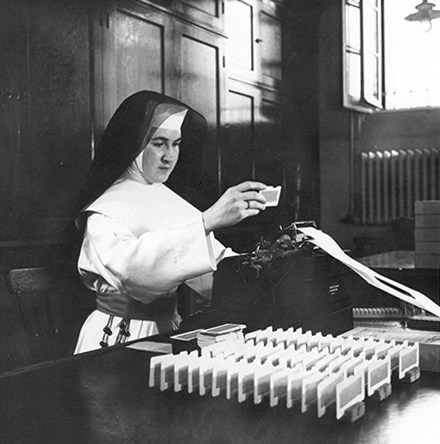
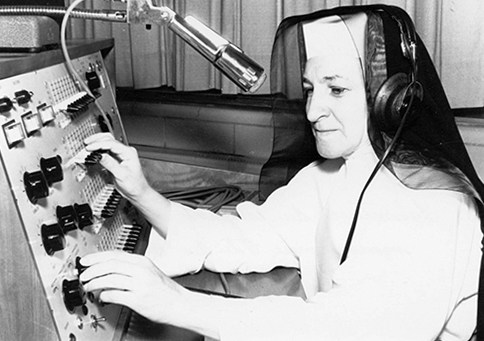
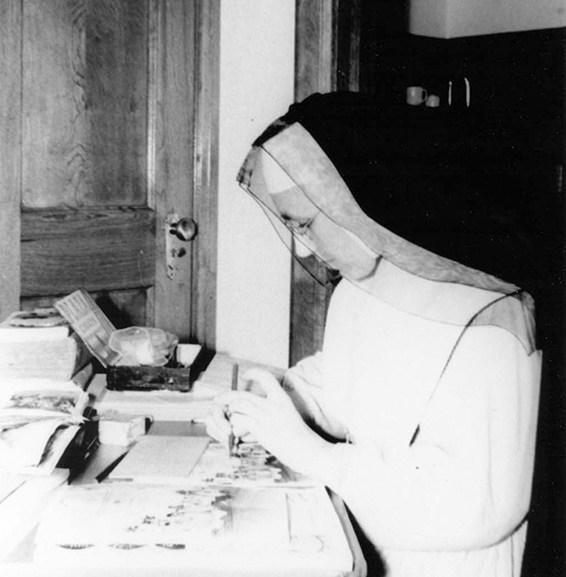
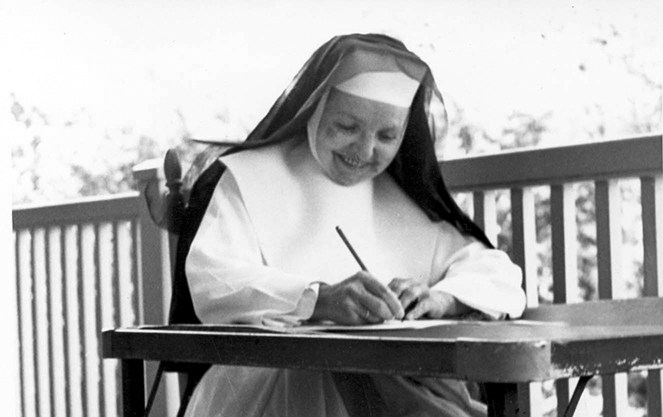
The secular community helped the mission and missionaries in countless different ways: by providing volunteer drivers, free lodgings, and delicious meals, to name only a few. The number of magazine subscribers steadily increased from 1920 to 1952, from a modest 200 to a remarkable 172,574. Almost every article was written by a missionary working abroad in the mission field. At the beginning, Délia oversaw every stage of the publication, revising every article and page layout with a fine-toothed comb. Our readers deserve the best and nothing should be left to chance, she wrote. Later on, the Sisters, working from the magazine’s basement head office, took care of every phase of creation: research, layout, photography, typography, computer graphics, and printing – not to mention subscriber services and mailing.
1923 – The First English Edition
The first English edition made its appearance in September 1923 and took the same name as its French counterpart: The Precursor. The French articles were translated by the MIC Sisters who were bilingual. In 1974, the English magazine changed its name – it became the MIC Mission News. From then on, the articles were written independently from those appearing in Le Précurseur. However, in January 1995, the MIC Mission News found new momentum and the articles that appeared in Le Précurseur were once again translated into English for the MIC Mission News. Since then, English and French readers receive the same information and content.
1926 – Magic Lanterns
At the time Le Précurseur was launched, Délia was struck with prophetic insight. A true trailblazer, she recognized the importance of missionary animation and encouraged it – not only through the magazine, but also through different audiovisual projects. In 1926, with the advent of the first “magic lantern,” Délia sent the Sisters to various schools with photographs of Canton, China, mounted on glass plates – the earliest form of slides. She knew that cultural media was relevant to the cause; the Church’s presence in the world could not be limited to the press. Driven by the need to proclaim the Gospel to as wide an audience as possible, the Church felt it had a duty to preach salvation through instruments of social communication (Vatican II). If Délia were here today, she would undoubtedly be on every available social networking site, including Twitter, Facebook, Instagram, and Google.
Nearing its 100th Birthday
Today, Le Précurseur / MIC Mission News is nearing its 100th birthday. The existence of this publication can only be understood in relation to the Mission. In the Quebec of yesteryears, the magazine was and still remains a voice that reminds Catholics of the importance of the Mission. Like John the Baptist, the Precursor, who prepared the way of the Lord, so it is for Christians who live the missionary dimension of their Baptism. This leitmotif expressed in colloquial language has been, at all times, the magazines guiding thread through years of change.
A woman of good judgment, Délia knew the written word could educate and shape a population. Consequently, the MIC Mission News strives to raise people’s awareness, spark their interest, teach them lessons, and challenge them. Through its simple pedagogy, the magazine encourages readers of all levels of education to build a more just society. To promote strong popular engagement, Délia believed in a popular approach. Her goal was a collaborative missionary effort available to all.
In each issue, human and Christian values cross and intersect. Inspired by our Foundress’ worldview, readers are asked to breathe new life into the world. The publication’s dual purpose is to promote mission awareness and to support the missionary work.
Further along the way…
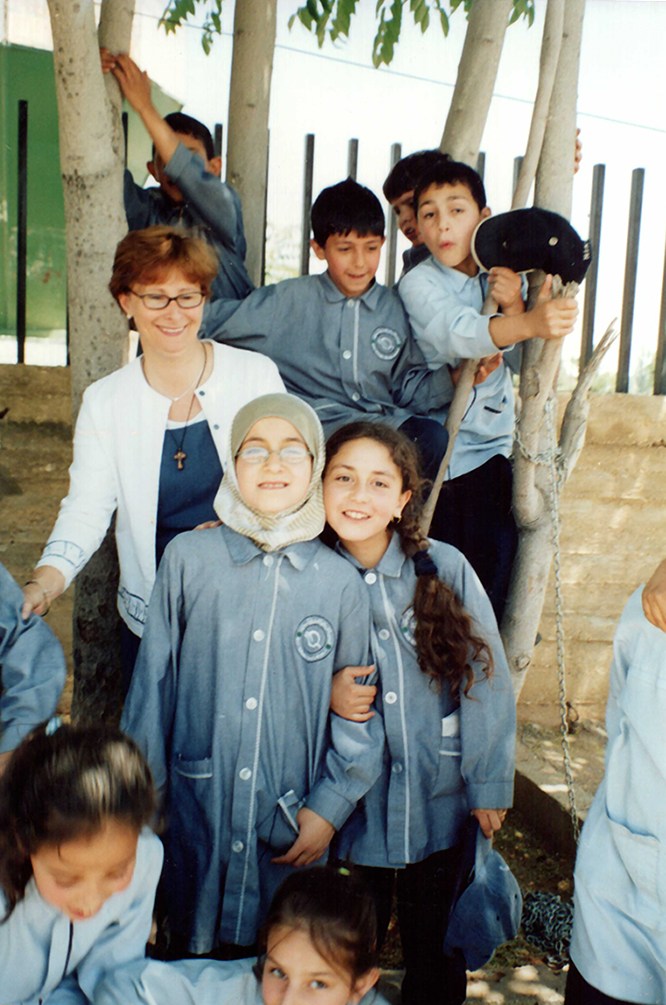
For all those who are lost and looking for answers, the MIC Missionary Press demonstrates how faith can give life meaning and help our sisters and brothers around the world. With the MIC Mission News / Le Précurseur, we’ve created universal bonds of solidarity between the local sending Church and the receiving Churches. We spread the Good News and share Good News. The MIC Missionary Press lends a voice to those who often go unheard and shares their cries of distress. Today, the MIC Mission News continues to forge bonds of friendship, universality, and fraternity. Through its pages, we are able to share the experiences of missionaries from here and elsewhere, to hear the stories of missionaries working in Canada and abroad, to impart the MIC’s spirit of thanksgiving, and finally, to inspire young people and foster new missionary vocations, as Délia once did.
… to the present day
Through its support for the missions, the MIC Mission News has become a symbol of generosity, sharing, and cooperation. If we wish to continue to enjoy the fruits of our labour, collaboration with the secular community is essential. On weekends, according to their availability, the parish promotional team endorses the magazine with the help of more than 600 lay people. To those who have supported and continue to support the MIC Missionary Press, either financially or spiritually, the MIC Mission News and Le Précurseur teams express their heartfelt gratitude. To our loyal readers, devoted collaborators, parents, friends, AsMIC (associates), and partners of the Mission, many thanks! To all of you, we are sincerely grateful.
Our two MIC publications continue to be the only missionary magazines in Quebec. Both are run entirely by a group of lion-hearted women who firmly believe in the importance of their mission. Although we have cut back our print-run, we are proud to say that the MIC Mission News / Le Précurseur are both still active and widely read as they approach their 100th birthday. We are facing new challenges with determination, because we believe that our magazine and the world share the same important mission: to sow joy and hope.